
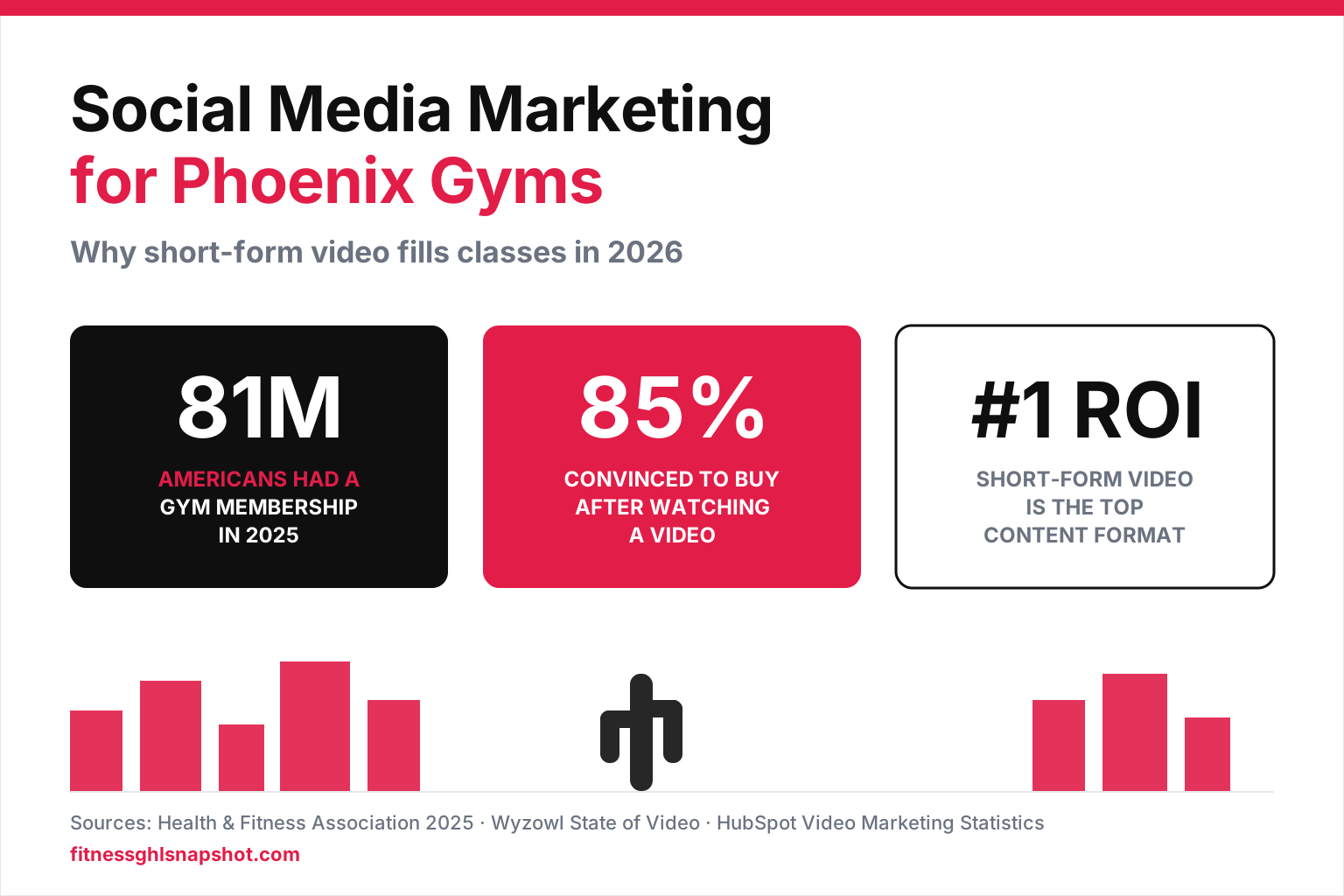
Social media marketing for a Phoenix gym in 2026 means one thing above all else: consistent short-form video. A stream of 15–30-second vertical reels — coach tips, class energy, member wins — is now the single most effective way a gym or studio gets discovered by new local members and convinces them to book a trial. The data backs it hard: short-form video is the content format marketers rank #1 for return on investment (HubSpot), and 85% of people say they’ve been convinced to buy a product or service after watching a video (Wyzowl). For a Phoenix operator competing in a metro of 5.19 million people (USAFacts), that reach is the difference between full intro classes and empty ones.
I spent years buying Facebook and Instagram ads for trainers and martial-arts schools before I learned the hard truth: the organic feed decides who even hears about you, and short-form video is what the algorithm actually pushes. This is the operator’s breakdown for Phoenix — why short-form wins, where your future members are really looking, what posting to nine apps by hand actually costs, and how a done-for-you social engine fills classes without stealing your floor time.
Table of contents
- The short answer for Phoenix gym owners
- Why short-form video is the format that fills classes
- Where Phoenix members actually find a gym now
- The real problem: posting to 9 apps is a second job
- What a done-for-you social engine does for your gym
- Build it yourself vs done-for-you: the math
- Is done-for-you social right for your Phoenix gym?
- FAQ
The short answer for Phoenix gym owners
If you run a CrossFit box in Tempe, a reformer studio in Scottsdale, a martial-arts academy in Mesa, or a PT business in Arcadia, here’s the compressed verdict:
- Short-form video is non-negotiable. It’s the format the algorithm rewards with reach and the format buyers say moves them. A gym posting reels consistently gets seen by local people who don’t follow it yet; a gym posting nothing stays invisible.
- Consistency beats production value. One polished video a month loses to five rough-but-real reels a week. Volume is what gives you shots at a breakout post — and in a 5-million-person metro, one viral reel can fill your intro classes for a month.
- You are the wrong person to do it daily. Filming, editing, captioning, cropping, and posting to nine platforms five days a week is a full content team’s job. Done well, it’s the cheapest local marketing you can run. Done off the side of your desk, it dies in week two.
The rest of this article is the why, with the numbers — and an honest look at when handing social to a done-for-you team is the right call and when it isn’t.
Why short-form video is the format that fills classes
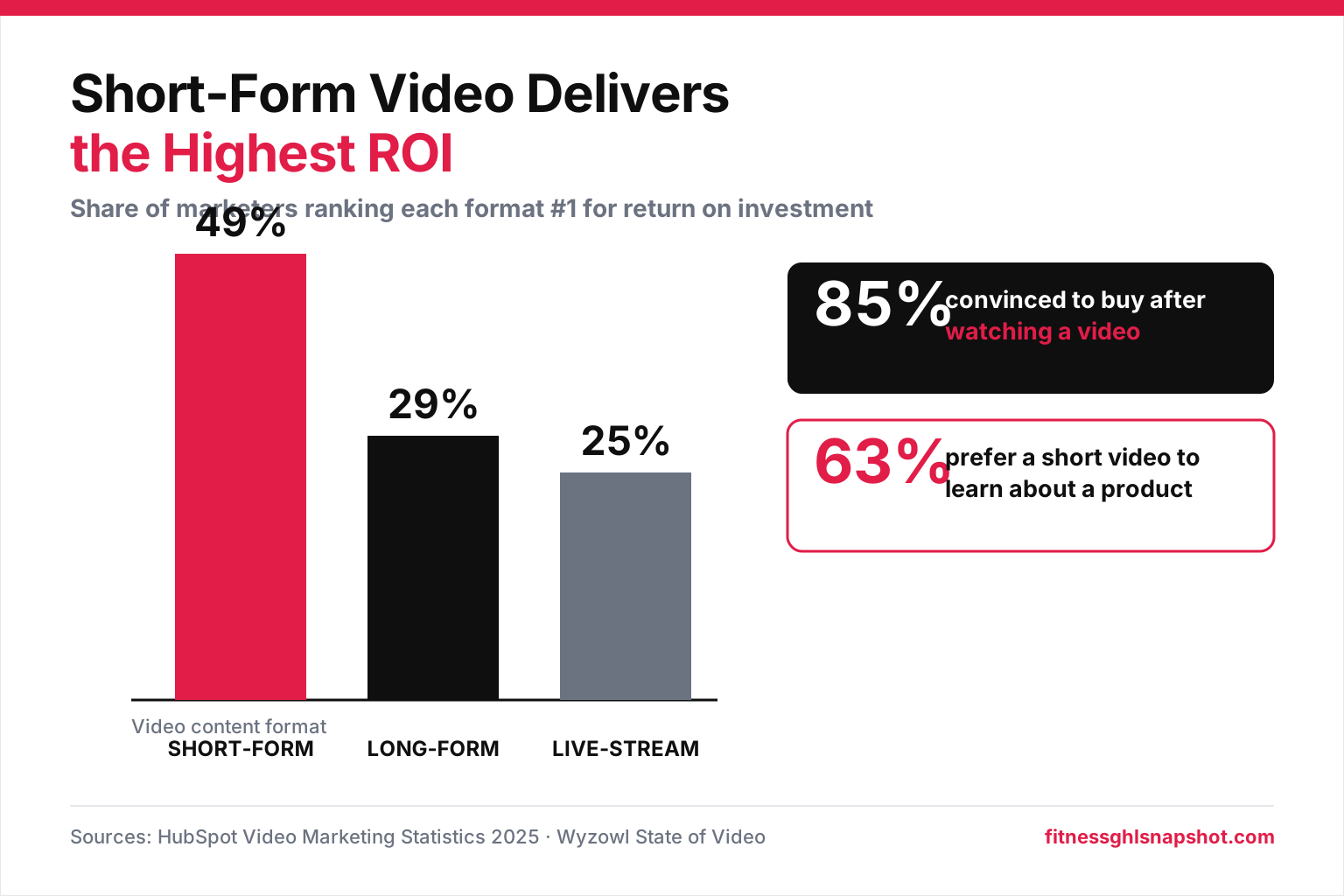
Every platform — Instagram, TikTok, YouTube, even Facebook — is now built to push short vertical video first. That’s not a trend; it’s where the reach lives. And marketers have noticed: short-form video is the content format they rank #1 for ROI, and it’s the format the largest share plan to invest more in this year (HubSpot).
Share of marketers naming each format their highest-ROI video content. Short-form video (Reels, TikTok, YouTube Shorts) leads by a wide margin. Source: HubSpot Video Marketing Statistics 2025.
The reason it converts is human, not technical. People would rather watch than read: 63% say a short video is how they’d most like to learn about a product or service, and 85% report being convinced to buy after watching one (Wyzowl). For a gym, a 20-second clip of a coach fixing someone’s squat, a member hitting a first pull-up, or the 6 a.m. class energy does more selling than a page of copy ever will — because a prospect can feel what your gym is like before they walk in.
Here’s the operator takeaway: you don’t need a studio, a videographer, or a viral idea. You need reps. Short-form video rewards the gym that shows up daily with real, human clips — and punishes the one waiting for the perfect edit.
Where Phoenix members actually find a gym now
The old model was Google Maps and word of mouth. That still matters — pair this with local SEO for your gym — but discovery has shifted into the social feed itself. Social media is now the top place Gen Z goes to search, surpassing traditional search engines (Sprout Social 2025 Index). Your future members aren’t only Googling “gym near me” — they’re scrolling Reels and TikToks, and the gyms that show up there win the consideration.
That matters enormously for a Phoenix gym right now, because the fitness market has never been bigger. A record 81 million Americans — 26.1% of the population — held a gym or studio membership in 2025, up 5.2% over 2024 (Health & Fitness Association). And the fastest-joining cohort is exactly the one living on short-form video: Gen Z drove nearly half of all new gym joins in 2025 and posted the highest membership penetration of any age group (HFA). If your Phoenix studio isn’t producing the video those buyers scroll, you’re not in the running for them.
Once video pulls them in, the next make-or-break is fast follow-up. A reel that generates a comment or DM only becomes a member if someone answers — which is why smart gyms pair content with Instagram and Facebook DM automation so no “how much is it?” ever goes cold, and back it with Google review automation so the social proof is there when a prospect checks.
The real problem: posting to 9 apps is a second job
Here’s where nearly every gym owner gets stuck. You know video matters. You even film a few clips. Then reality hits: Facebook, Instagram, TikTok, YouTube, Google Business Profile, LinkedIn, Pinterest, Threads, and Bluesky each want a different aspect ratio, caption style, and hashtag set. Editing one reel into nine correctly-formatted posts, writing captions, scheduling, and publishing — five days a week — is a genuine full-time content role, not a between-classes task.
So it goes one of two ways. Either you skip most channels and post sporadically (which the algorithms read as “inactive” and stop showing), or you burn nights on it until you quietly stop. Neither fills classes. This is the single most common reason a Phoenix gym’s social “doesn’t work” — not bad content, just no consistency, because consistency at this volume is a job.
And it’s an expensive job to hire for. The average U.S. social media manager earns roughly $71,500 a year (Glassdoor) — about $6,000 a month for one person who still can’t shoot, edit, design, and manage community by themselves. A real in-house content team — designer, video editor, social manager, community manager — runs $4,000–$8,000 a month. For most independent gyms, that math simply doesn’t close.
What a done-for-you social engine does for your gym
This is the gap a done-for-you social media service is built to fill: the whole content team, as a system, for a fraction of one salary. Instead of you filming, editing, and posting, a fitness-niche team runs the engine for you:
- We film and edit the short-form video — vertical reels with hooks and captions built for reach: coach tips, class energy, member transformations, the content most likely to reach new Phoenix locals.
- We produce the full weekly mix — every week, per brand: 1 text post, 1 image post, 2 carousels, and 1 reel, written in your studio’s voice, cropped per platform.
- We publish to all 9 channels, 5 days a week — Facebook, Instagram, TikTok, YouTube, Google Business Profile, LinkedIn, Pinterest, Threads, and Bluesky — so you never touch a scheduler.
- We run 3 AI agents on top — a comment agent that replies under your TikTok/IG/FB posts, a DM agent that answers messages and books trials, and a web-chat agent that captures leads on your site 24/7. High engagement is exactly what the algorithm rewards with more reach.
- We report per channel, monthly — one clear report across all 9 platforms so you always see what your investment is doing.
One honest note on timeline, because anyone promising overnight results is lying: organic growth compounds. Meaningful, sustained lift from consistent posting usually lands in roughly 3–5 months as the algorithms start surfacing your content to new local audiences. But because the engine ships 5 days a week across 9 channels, you get dozens of shots at a breakout reel — and in a metro of 5.19 million, a single one going viral can flood your intro classes far sooner.
Build it yourself vs done-for-you: the math
Let’s put the three real options side by side for a Phoenix operator — because the cost gap is the whole argument.
Approximate monthly cost to run your gym’s social. In-house figure = the ~$71,500/yr average social-manager salary (Glassdoor) as a monthly rate, before payroll taxes and benefits; done-for-you = Fitness Snapshot single-brand pricing.
Running your gym's social: three ways
| Plan | DIY (You Post It) | In-House Hire | Done-For-You recommended |
|---|---|---|---|
| Price | Your time | ~$6,000/mo | From $397/mo |
| Feature 1 | Hours a week filming, editing, posting | One salary, one skill set | Full team: film, edit, design, publish |
| Feature 2 | 9 platforms, 9 formats, by hand | Payroll taxes + benefits on top | All 9 channels, 5 days a week |
| Feature 3 | Consistency dies in week 2 | Can't shoot, edit, design & manage alone | 3 AI agents: comments, DMs, web chat |
| Feature 4 | No design or editing help | You recruit, train, and manage them | Written in your studio's voice |
| Feature 5 | You handle every comment & DM | Sick days = posting stops | White-label, no setup fee |
| Feature 6 | Ramp: slow, usually stalls | Ramp: weeks to hire | Ramp: live in days, cancel anytime |
| — | — | See social plans |
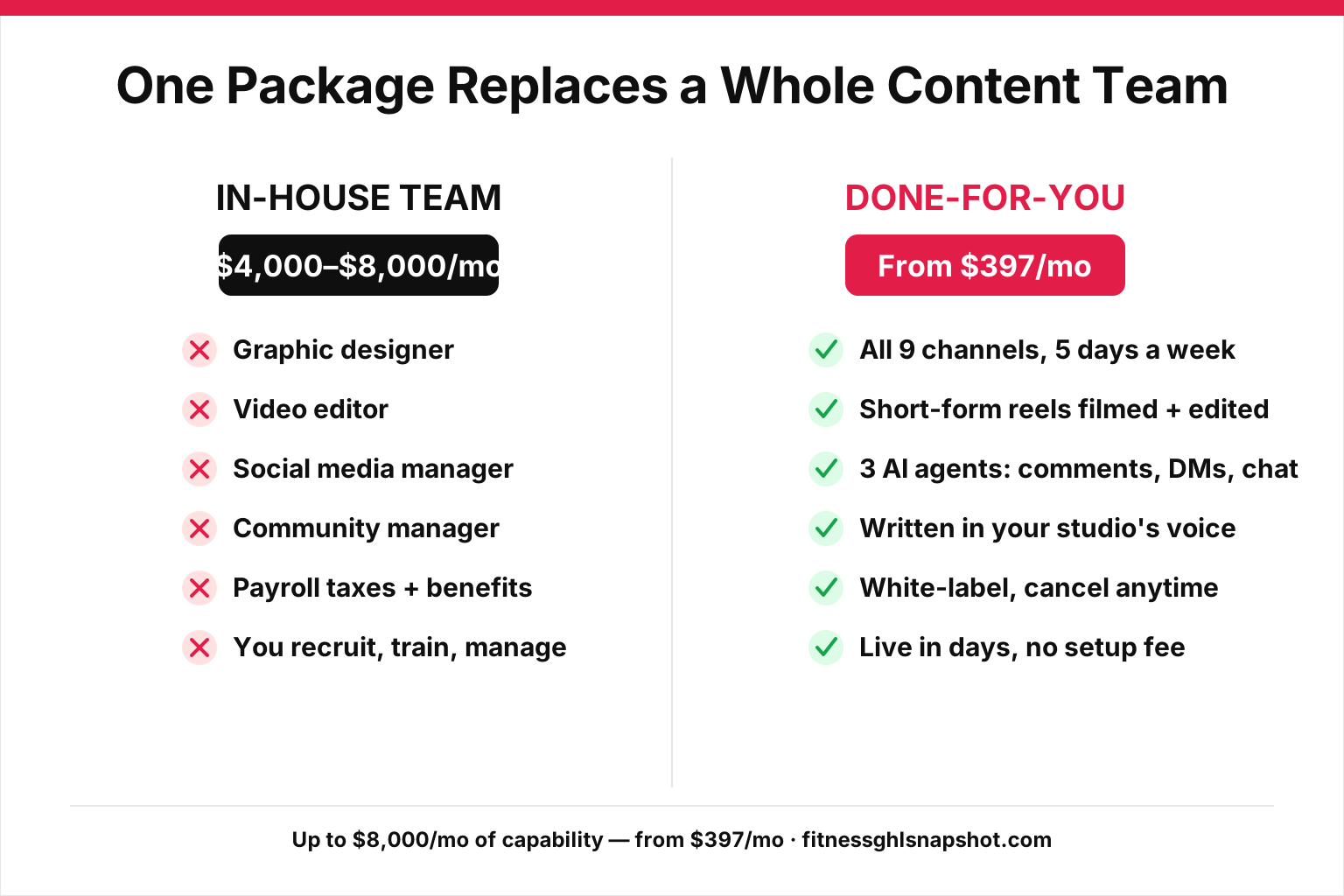
The point isn’t that a done-for-you engine is a little cheaper — it’s that it delivers what a single hire can’t: filming, editing, design, publishing to nine platforms, and community management, all at once, for less than a tenth of a loaded salary. Up to $8,000 of monthly capability, from $397. For an independent Phoenix gym, that’s the only version of “run real social” that actually pencils out.
Is done-for-you social right for your Phoenix gym?
I’d rather you make a good call than a fast one, so here’s the honest read.
Done-for-you social is a strong fit if you:
- Know short-form video matters but can’t produce it consistently yourself.
- Have tried posting and watched it die off after a couple of weeks.
- Run intro offers or trials and want more local people to actually see them.
- Want the comments, DMs, and web chat answered so leads don’t go cold.
- Are an agency serving Phoenix gyms and want white-label content under your brand.
It’s less urgent if you:
- Already have a dedicated content person shipping daily video across every channel.
- Are pre-launch with no offer, no space, and nothing yet to show.
- Get all the members you can handle from referrals and a waitlist (rare, but real).
Most independent Phoenix gyms and studios are squarely in the first group: they believe in video, they just can’t sustain the volume alone. A done-for-you engine doesn’t replace your voice — it scales it, so the format that fills classes is running every day whether or not you had time to think about it. If you want the follow-up side handled too, pair it with our broader Instagram playbook for gyms and the automation in our fitness snapshot.
The bottom line
For a Phoenix gym in 2026, social media marketing has narrowed to one job done consistently: ship short-form video, everywhere, all the time. It’s the format marketers rank #1 for ROI, the one 85% of buyers say convinced them, and the one your fastest-growing member cohort lives inside. The demand is record-high — 81 million members and climbing — and discovery has moved into the feed, where the gyms posting daily win and the ones posting sporadically vanish.
The catch is that doing it right — nine platforms, five days a week, filmed and edited and captioned — is a full content team’s job, not an owner’s side task. You can burn out trying, spend $6,000+ on one hire who can’t cover it all, or hand the whole engine to a done-for-you fitness-niche team for $397 a month and get back to the floor. In a metro of five million people, the gyms that win the next year won’t be the ones with the best equipment. They’ll be the ones people actually see.
Frequently asked questions
What is the best social media strategy for a gym in Phoenix?
Consistent short-form video is the core strategy. Post 15–30-second vertical reels — coach tips, class energy, member wins — across Instagram, TikTok, YouTube, and Facebook five days a week, in your studio's voice. Short-form video is the format marketers rank #1 for ROI (HubSpot), and 85% of people say they've been convinced to buy after watching a video (Wyzowl). Pair the content with fast DM and comment follow-up and Google review generation so the local people who discover you actually convert into booked trials.
How often should a gym post on social media?
Aim for content five days a week, per platform. Algorithms reward consistency and volume, and posting frequently gives you more shots at a reel that breaks out. A practical weekly mix per brand is 1 text post, 1 image post, 2 carousels, and 1 short reel — cropped and captioned for each of the nine platforms. Sporadic posting reads as inactivity and gets suppressed, which is why most gym social 'fails' — it's a consistency problem, not a content problem.
Why is short-form video so important for gyms?
Because it's where discovery and reach now live. Every major platform pushes short vertical video first, social media is now the top search destination for Gen Z (Sprout Social 2025 Index), and Gen Z drove nearly half of all new gym joins in 2025 (Health & Fitness Association). Video also sells: 63% of people would rather watch a short video than read to learn about a product, and 85% report being convinced to buy after watching one (Wyzowl). For a gym, a 20-second clip lets a prospect feel your gym's vibe before they ever visit.
How much does done-for-you gym social media cost vs hiring someone?
A done-for-you fitness social service starts at $397/month for one brand (up to 4 brands for $997/month), including content across all 9 channels and 3 AI agents for comments, DMs, and web chat. Hiring in-house is far more: the average U.S. social media manager earns about $71,500/year — roughly $6,000/month before taxes and benefits — for one person who still can't film, edit, design, and manage community alone. A full in-house content team runs $4,000–$8,000/month. Done-for-you delivers the whole team's output for a fraction of one salary.
How long until social media brings my Phoenix gym new members?
Organic social is a compounding game. Expect meaningful, sustained lift in roughly 3–5 months as the algorithms start surfacing your content to new local audiences. That said, because a done-for-you engine ships five days a week across nine channels, a single reel can go viral much sooner and fill your intro classes fast. Anyone promising guaranteed 30-day organic results isn't being honest — but consistency reliably compounds into steady inbound trials.
Do I keep my content if I cancel the service?
Yes. Every post, graphic, and reel you paid for is yours to keep. The done-for-you service is white-label by default and cancels with 15 days' notice before your next billing cycle — everything created for you stays with you, and every lead the AI agents capture lands in your own CRM.
About the author
Cole Hartman is our Local Marketing & Paid Acquisition Lead, based in Tampa, FL. He started out buying Facebook and Instagram ads for personal trainers and martial-arts schools, then learned the hard way that the funnel and the feed behind the ad matter more than the creative. He now pairs organic short-form content and paid acquisition with GoHighLevel follow-up so gyms stop paying for attention that never converts — and writes about ad funnels, review flywheels, and turning local visibility into booked trials.